
The House
The MEDUSA imagination
MEDUSA was born from a conviction: some materials do not wait for us to invent a form for them, only to reveal one. Madagascar's petrified wood is the extreme case.
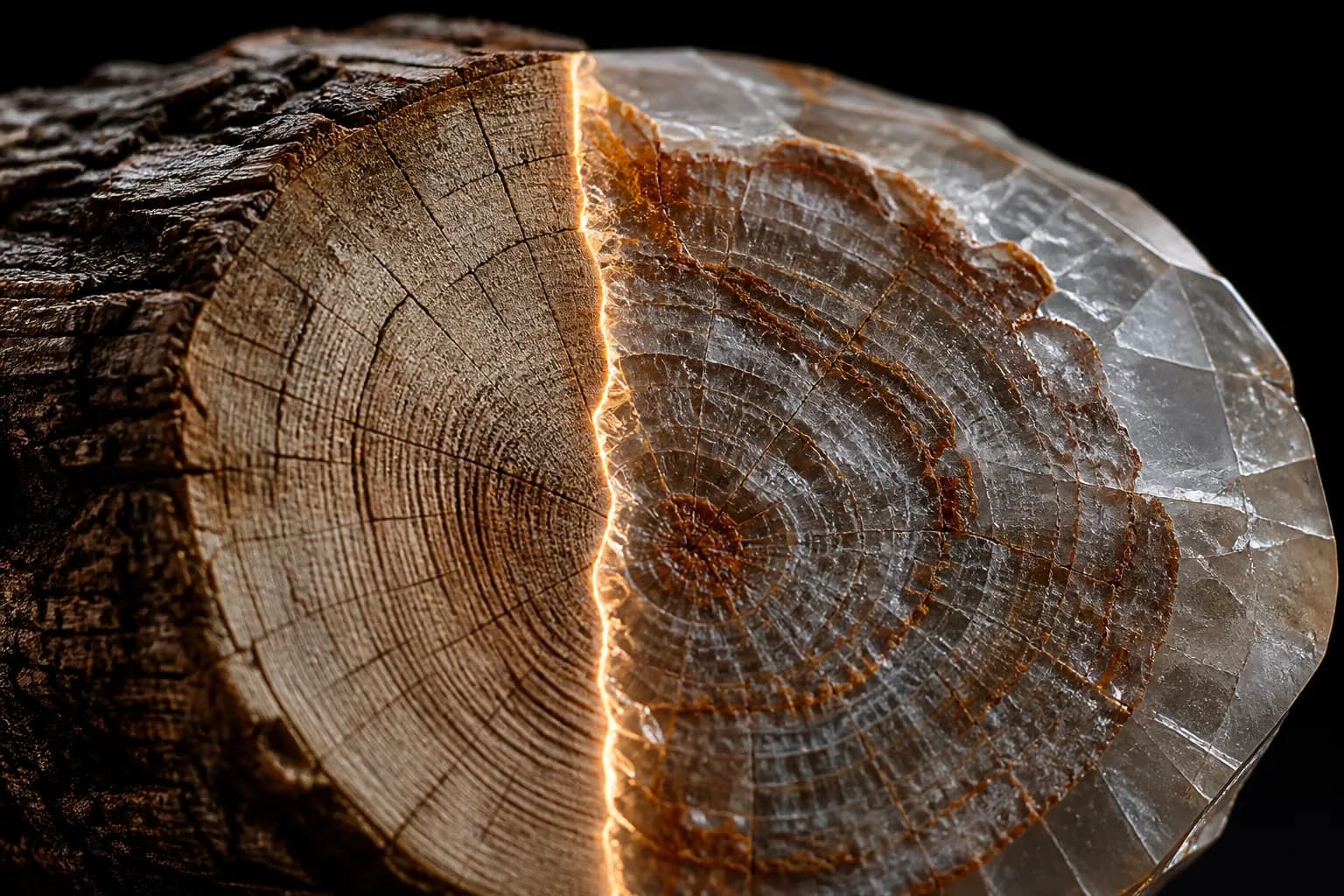
Metamorphosis
Time become mineral
Petrification is a slow mineralisation: the structure of wood can remain legible while the material acquires the density of stone.
Growth rings, crystallisations and contrasts become time's visible archives. A petrified trunk slice is as much a document as an object.
None of this drawing was composed. It records seasons, droughts and floods in an order no workshop could recreate, which the cut merely brings to light.
The name
An allegory of transformation
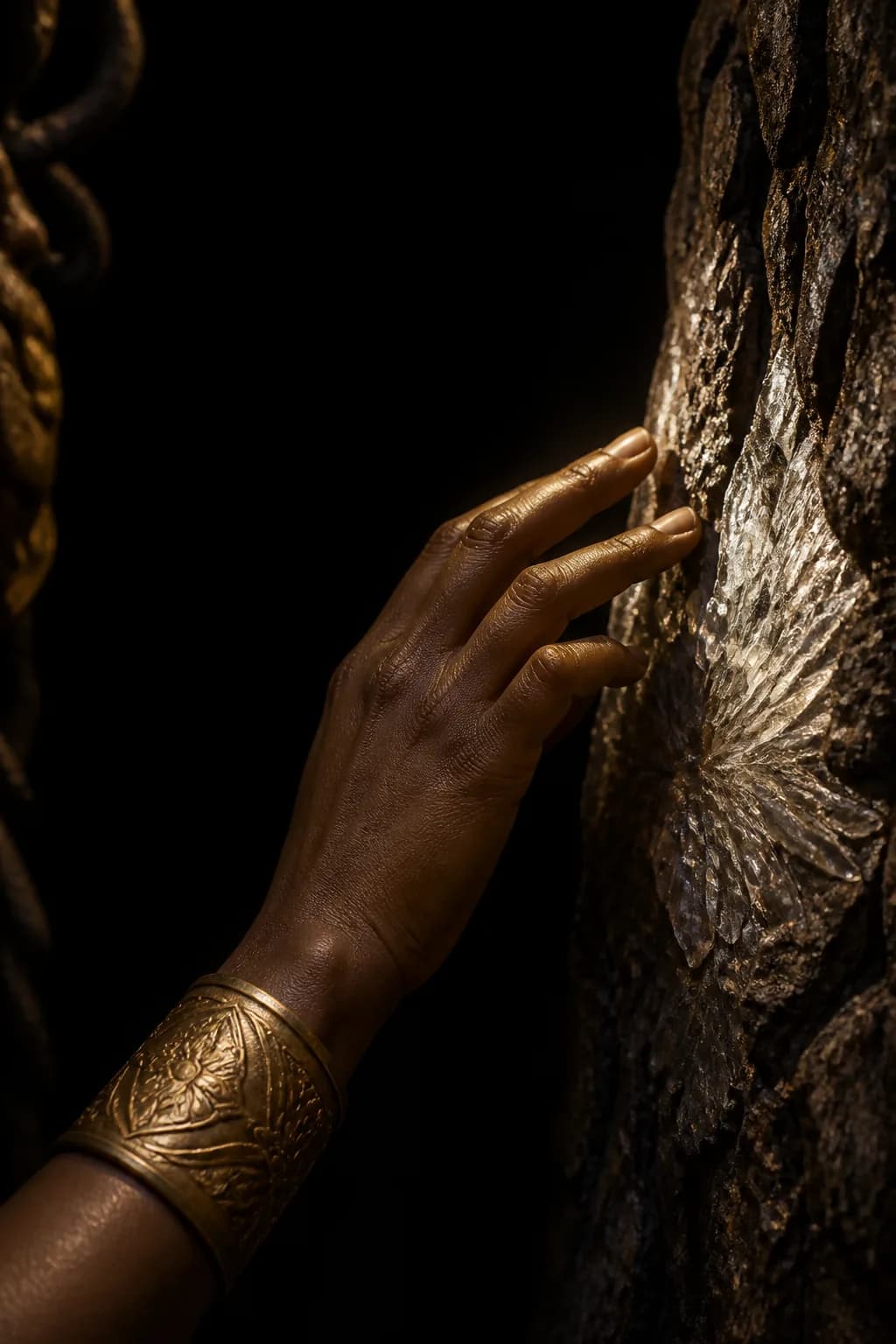
The figure of Medusa belongs to the House's imagination: the one whose gaze turns matter to stone. She is used as an allegory of transformation, conceived as contemporary work rather than historical reconstruction.
Wood turned to stone needs no myth to exist. Myth merely names what geology took millions of years to write.
Eternity takes root.

The origin
What is gathered is not manufactured
The material does not come from a workshop; it comes from the earth. A mineralised trunk is located, cleared and carried for dozens of kilometres along tracks, in a country where logistics are measured in days.
None of this can be reproduced on demand. That is the first reason a piece remains a single example, before even considering its drawing.
See what time has left
The story ends here; the pieces take over. Each comes from a different trunk and exists as a single example.
The collection